What Tri-Cities Sun, Heat and Wind Do to Your Exterior Paint
Eastern Washington weather wears on paint in predictable ways, and knowing the pattern tells you when to act.
September 30, 2026 · 4 min read
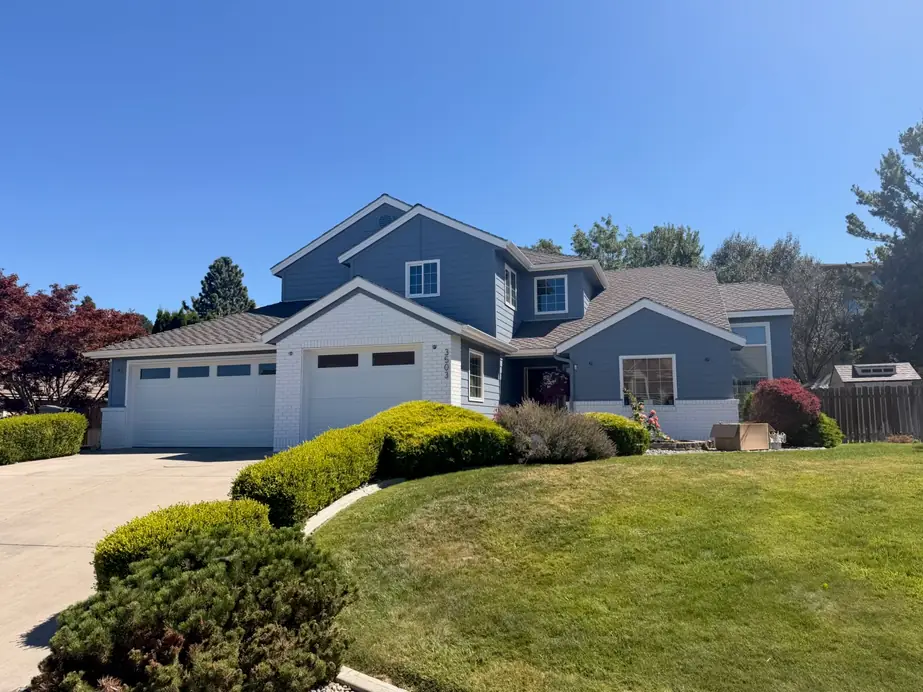
Walk around almost any neighborhood in Kennewick, Pasco or Richland at the end of summer and you can read the weather on the houses. The south and west walls look tired first. They have spent months in direct sun, and the paint shows it long before the shaded north side of the same house does. That pattern is useful, because it tells you where to look and when to act.
What sunlight does to a paint film
Paint is a thin film, and ultraviolet light slowly breaks down the binder that holds the color in place. As the binder weakens, the surface turns chalky. Rub your palm across a sun-faded wall, and if it comes away with a fine powder, you are looking at chalking. The film is wearing away from the top down.
Color fades along with it. Deep shades and strong reds and blues tend to show the change first, because the pigment is exposed as the binder thins. The wall doesn't only look older. It has less paint standing between the weather and the wood or stucco underneath.
Sun also heats the surface. A dark wall facing west on a July afternoon can be too hot to keep your hand on. Boards and trim expand in that heat and shrink again overnight, and a paint film that has already gone brittle doesn't follow that movement well. Hairline cracks start at board ends and corners, then open up.
Dry heat and wind do their own damage
Smile-A-Mile Painting puts it plainly: Eastern Washington's intense summer sun, dry heat, and seasonal winds can wear down siding, trim, and exterior surfaces over time. The dry part matters as much as the hot part. Low humidity pulls moisture out of wood, and wood that dries out shrinks, opens small gaps at joints and lets the grain lift under the paint.
Wind adds grit. Dust and sand blow across a wall like very fine sandpaper, and they settle into every crack and gap. Over a few seasons that abrasion thins the coating on exposed corners and on the windward side of the house. If you have ever noticed that one corner of your home always looks worse than the rest, wind and sun are the usual reason.
Which parts of the house go first
Horizontal and sun-facing surfaces take the worst of it. Window sills, fascia boards at the roofline and the tops of trim pieces catch sun all day, and thin boards heat up and move more than a thick wall does. Soffits under deep eaves are often fine, while the fascia right beside them is failing.
Garage doors are the other early casualty. They are big, flat and often face the street, and a dark door on a west-facing wall flexes with heat more than almost anything else on the property. Shutters and front doors in full sun follow. Siding goes last on most houses, but once it starts, the south and west faces run well ahead of the rest.
Signs it is time to repaint
You don't need a trained eye to spot a house that is ready. Walk the perimeter in the afternoon, when low sun shows surface texture, and check for these:
- Chalky powder on your hand when you rub the siding.
- Color that has faded unevenly, darkest loss on the south and west walls.
- Hairline cracks or peeling at board ends, corners and around windows.
- Caulk that has shrunk, split or pulled away from the trim.
- Bare or gray wood showing at sills, fascia or the bottom edge of the garage door.
One or two of these on a single wall is an early warning. Several of them across the house means the paint is no longer doing its job.
Why waiting usually costs you more
While the existing film is mostly intact, a repaint is a matter of cleaning, sanding, sealing gaps and putting fresh coating over a sound surface. Once paint is peeling in sheets and bare wood is open to the weather, the job changes. There is more scraping, more repair and more priming before any color goes on, and some boards may need replacing.
Water is the other reason not to wait. Tri-Cities rain is light, but lawn sprinklers hit siding and trim all summer long, and any bare spot or open seam will take that water in. Wood that stays damp behind a failing coating swells and rots in a way that dry weather alone never causes.
What a careful exterior job covers
Smile-A-Mile paints lap siding, T1-11 and board and batten, stucco, shakes, and brick or stone, and the work starts well before the first coat. Their exterior prep includes pressure washing, scraping, sanding, caulking and priming. Their construction repair work is meant to reseal and protect your home, so small problems get dealt with rather than painted over.
The crew covers siding, trim, fascia and soffit, garage doors and shutters as one system, which matters in this climate. A fresh wall next to worn trim will fail at the edges first, and you will be back to the same problem within a couple of seasons.
If your house is showing several of the signs above, call Smile-A-Mile Painting at (509) 987-4774 to set up an estimate visit. They will look at the surfaces, talk through what the walls need and send a detailed proposal by email.
Smile-A-Mile Painting, (509) 987-4774
Call (509) 987-4774More articles
What Happens Before the First Coat of Exterior Paint
The part of a paint job you never see is the part that decides how long it lasts.
Choosing Exterior Colors That Hold Up in Tri-Cities Light
A color that looks right on a small chip indoors can read very differently on a full wall in August sun.