Low VOC and Antibacterial Paint for Bedrooms, Baths and Kids' Rooms
The paint on your walls shapes how a room smells and how it holds up, and the prep and cleanup shape how the job feels.
September 30, 2026 · 4 min read
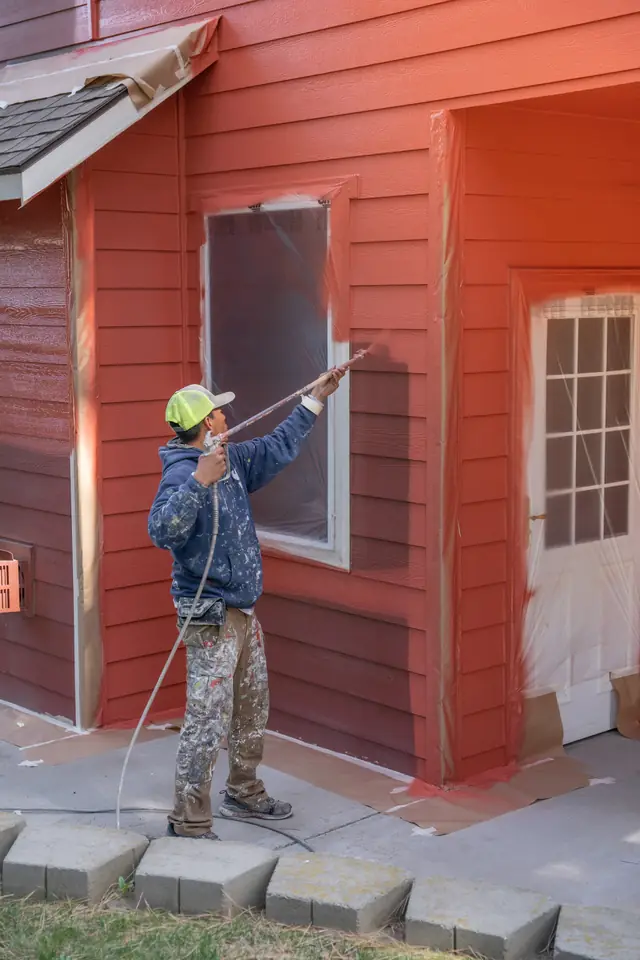
Interior painting happens in the rooms where your family lives, sleeps and gets ready for the day. That changes what matters. Fumes, cleanliness, how long the smell lingers and whether a bathroom wall stays fresh all count as much as the color. Two product terms come up often when you start asking: low VOC and antibacterial.
What low VOC means
VOC stands for volatile organic compounds, the gases some paints release as they dry. Those gases are much of what you smell when you walk into a freshly painted room. A low VOC paint is made to release fewer of them, which usually means a milder smell during and after the job.
Low VOC doesn't mean no ventilation. Open windows and run fans when you can, and give the room time before you use it for sleeping. If anyone in your house is sensitive to smells, tell the estimator early so the plan can account for it.
What antibacterial paint is for
Smile-A-Mile Painting uses low VOC and antibacterial paint on interiors to help protect your home from mold and mildew and help stop the growth of bacterial odors. The wording is deliberate: it is a helper, not a cure. Paint won't fix a leak, and it won't replace good ventilation.
Where it earns its place is in rooms that stay damp or see heavy use. Bathrooms steam up every day, bedrooms collect dust and moisture overnight, and kids' rooms take sticky hands, spills and constant wiping. A surface made to resist mildew and odors gives you a little more margin in each of them.
Bedrooms, bathrooms and kids' rooms
In bedrooms, the main draw is a lighter smell and a finish that stays clean. Flat and matte sheens hide wall flaws and look soft in lamp light, and they are a popular choice for ceilings and sleeping rooms.
Bathrooms need more attention. Humidity is hard on paint, so moisture-resistant products, a working exhaust fan and a sheen that wipes clean all help. If you see mildew on a bathroom ceiling, mention it, because the cause should be dealt with along with the paint.
Kids' rooms are where durability shows. A satin finish on walls takes scrubbing better than flat does, and trim and doors in semi-gloss handle fingerprints. Smile-A-Mile paints walls, ceilings, trim, doors, cabinets and millwork, so the whole room can be treated as one job rather than several.
Prep makes the smooth wall
Good interior paint still needs a good surface. Nail holes get filled, and minor sheetrock settling cracks get repaired before anything is rolled on. Those small flaws show through even the nicest paint, especially on walls that catch side light from a window.
Cabinets and trim need cleaning and proper preparation so the finish bonds. Kitchen cabinets collect grease you can't see, and skipping that step is how you get a finish that chips within months.
What living through an interior repaint looks like
Smile-A-Mile asks you to do a little before the crew arrives. You move small items and pictures, and you pull furniture toward the middle of the room. The crew then covers your belongings and removes switch plates so paint doesn't end up where it shouldn't.
They mask with a combination of paper, plastic and tape. When the job is completed, they clean up their materials and take their garbage with them, so you aren't left with drop cloths and empty cans in the garage. A customer, Troy Brigham, wrote that the crew arrived on time and maintained a clean work environment.
How the process runs
The company's process starts with understanding your project: who, what, when and where. Estimators then visit and send a detailed proposal by email covering the process, the products and the price. After you approve it, a 50 percent deposit comes first, then color selection and scheduling with their customer care team.
Before you commit to a sheen, look at a sample on your own wall in the room's real light. Lamp light, morning sun and an overhead fixture can each make the same white or gray look different. Ceilings are usually flat so they don't show roller marks, and trim is usually glossier than the walls so it reads as a clean frame.
The last step is the one that gives the company its name. You walk through the finished rooms, and you smile at a job well done. If you want help picking colors first, the free in-office color consultation uses a Color Visualizer and paintable samples.
If you are planning an interior repaint in Kennewick, Pasco, Richland or nearby, call Smile-A-Mile Painting at (509) 987-4774 and ask about their low VOC and antibacterial options.
Smile-A-Mile Painting, (509) 987-4774
Call (509) 987-4774More articles
What Tri-Cities Sun, Heat and Wind Do to Your Exterior Paint
Eastern Washington weather wears on paint in predictable ways, and knowing the pattern tells you when to act.
What Happens Before the First Coat of Exterior Paint
The part of a paint job you never see is the part that decides how long it lasts.